



Manufacturers
A catalog of manufactured products with specifications, available variations, and technical documentation.
CATALOG WEBSITES FOR BUSINESS
I provide turnkey catalog website development in Almaty and across Kazakhstan for manufacturers, suppliers, and service companies.
I build product catalogs with clear structures, product pages, search, filters, and inquiry forms.
A catalog of products or services, with the option to add the features you need.
SOLUTIONS FOR DIFFERENT INDUSTRIES
A catalog website is ideal for companies that need to present their range of products, equipment, components, or services in a clear and convenient way.
I develop catalog websites for businesses in Almaty and across Kazakhstan. The structure, product pages, and functionality are tailored to the characteristics of the products and the company's goals.
A catalog website can work without a shopping cart or online payments: visitors browse the products or services and submit inquiries.
A catalog of manufactured products with specifications, available variations, and technical documentation.
Organizing product ranges by categories and SKUs, with convenient search and requests for quotations.
Industrial equipment catalogs featuring technical parameters, configurations, specifications, and attribute-based filters.
A catalog of spare parts and components. Vehicle make and model selection can be added when reliable compatibility data is available.
Presenting construction materials and tools with filters by brand, intended use, and dimensions.
Furniture catalogs with photographs, dimensions, material and finish options, and customer inquiry forms.
A structured catalog of medical equipment and consumables, complete with descriptions and technical specifications.
Service catalogs with categorized offerings, detailed descriptions, examples of solutions, and the ability to submit an inquiry.
CATALOG WEBSITE CAPABILITIES
A well-planned structure, convenient search, and informative product pages help visitors find what they need and submit inquiries.
Catalog development starts with an analysis of your product range and business requirements. Features are selected individually: from a simple service catalog to an advanced product selection system based on specifications.
Shopping carts and online payments are not mandatory. Your website can accept requests for quotations, consultations, or commercial proposals.
A multi-level catalog structure for convenient navigation through your product range.
Photos, specifications, descriptions, documents, and configuration options.
Search by product name, SKU, and specifications, with filters based on product attributes.
Find compatible products when the necessary product compatibility data is available.
Inquiry forms, WhatsApp contact, and requests about specific products.
Catalog editing through the CMS, clear page URLs, and structured metadata.
Catalog / Equipment
Example product page with an image, specifications, and an inquiry form.
This is a demonstration product page, not a real product.
WEBSITE GROWTH
After launch, I can help expand your website's functionality, attract visitors, and provide ongoing technical support.
WEB-S / REAL PROJECTS
Examples of catalog website development in Almaty and across Kazakhstan for companies that need to showcase their products or services clearly, help visitors find the right solutions, and encourage customer inquiries.
 SERVICE CATALOG
↗
A multi-page catalog website for construction and engineering services. Design, construction and installation work, engineering networks, and maintenance services are presented as separate service categories.
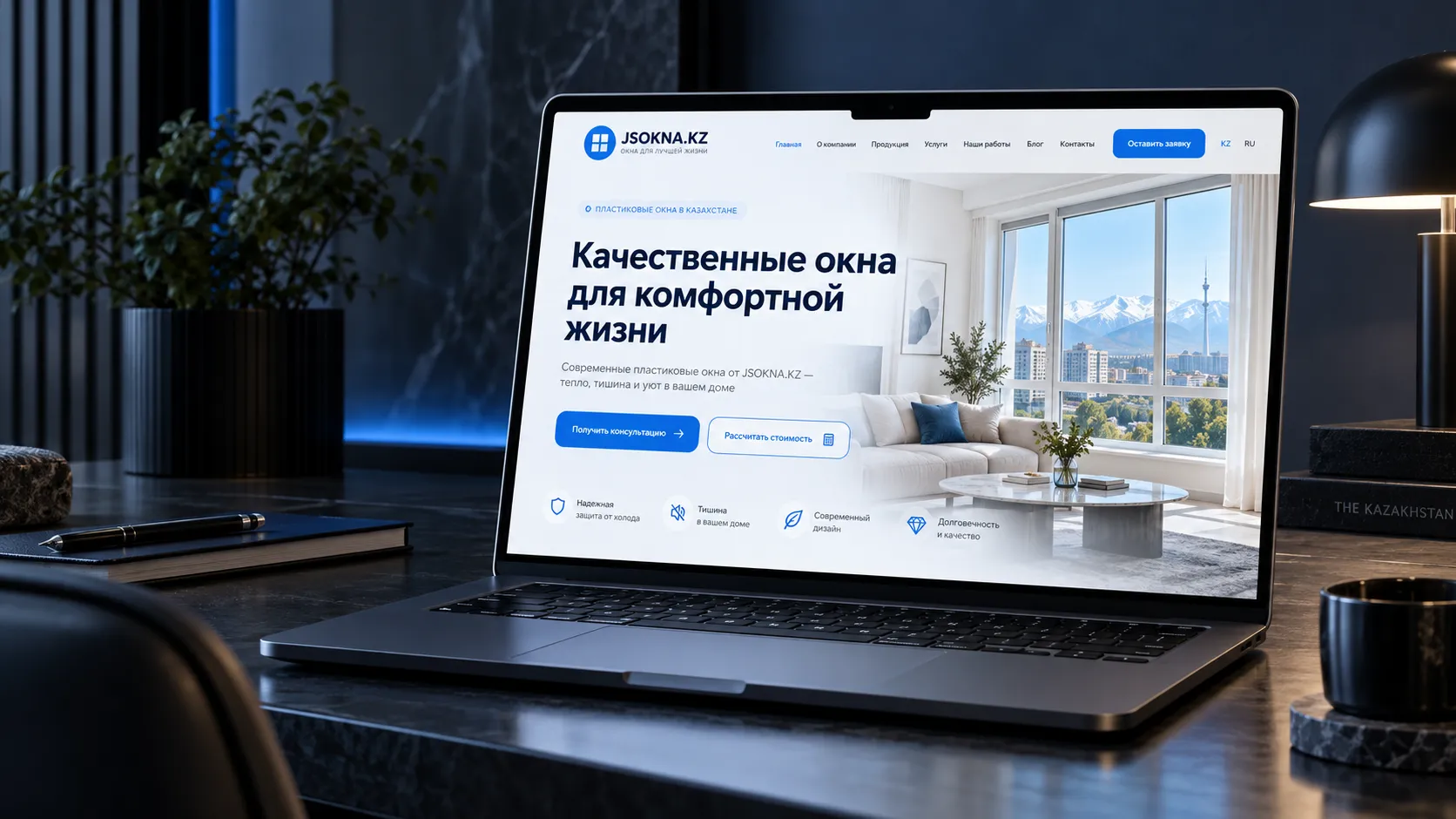 PRODUCT CATALOG
↗
A business website featuring a catalog of PVC windows. Visitors can explore window designs, sizes, configurations, and profile options before requesting a price estimate.
Catalog website development in Almaty starts from 200,000 ₸. Let's discuss your website structure and required features.
DEVELOPMENT PROCESS
Catalog website development starts with a well-planned structure and ends with testing the completed project.
Every stage takes into account the characteristics of your product range, the visitor experience, and opportunities for future website growth.
I analyze your product range and business requirements. I define the categories, subcategories, product attributes, and structure of the future catalog.
I plan category pages, product cards, navigation, and inquiry forms. I create a responsive website design for different screen sizes.
I build the website on Joomla and configure content management, product categories, product pages, and any additional functionality agreed upon for the project.
I test the catalog on different devices and check inquiry forms and website navigation. I implement the technical SEO settings agreed upon for the project.
I publish the completed website, check its functionality after launch, and explain how to manage the catalog. Ongoing technical support is discussed separately.
The timeline depends on the number of categories and product pages, the readiness of content, the complexity of search and filtering, and the required integrations. Development timelines are confirmed after agreeing on the technical specifications.
DEVELOPMENT PRICING
Catalog website development in Almaty starts from 200,000 ₸. The final price depends on the catalog structure, number of products, and required functionality.
I create catalogs of products, equipment, spare parts, and services for businesses across Kazakhstan, with convenient navigation and room for future expansion.
The number of categories, subcategories, and product pages, as well as content population requirements.
Attribute-based filters, search by SKU, and product selection based on specifications.
Model-based product selection, product imports, integration with external systems, and custom requirements.
The project scope and final price are agreed individually before development begins.
Starting Development Price
Custom Pricing Based on Your Business Needs
Advanced filtering, spare-part selection by equipment model, bulk product imports, and integrations with external systems.
Preliminary Estimate After Discussing Your Requirements
Yes. A catalog can serve as a product presentation tool, displaying the product range, technical specifications, and configuration options. Instead of making a purchase, visitors can request pricing or a quotation. This format is suitable for wholesale suppliers and companies offering individual sales terms.
For a large product range, the structure of categories and attributes is planned first. Products are organized into categories, while search, filtering, and sorting help visitors find the items they need. Data volume, ease of administration, and page performance are considered during development.
It is advisable to prepare product names, SKUs, photographs, descriptions, specifications, and category assignments. For equipment, manuals, drawings, and technical data sheets are also useful. The required fields are determined according to the specific product range.
Bulk importing is possible if the data format allows product names, categories, SKUs, and attributes to be mapped correctly. Before importing, the quality of the spreadsheet, duplicate records, and the need for data transformation are assessed. Import setup is estimated as part of the technical specifications.
Yes. If compatibility data is available, a selection system can be developed based on manufacturer, model, and component type. For example, visitors can select a sewing machine model and see a list of compatible spare parts. Without reliable compatibility data, suitable parts cannot be identified automatically.
Filters use structured product attributes such as manufacturer, size, material, power rating, intended use, and other parameters. Visitors select the desired values, and the catalog displays matching products. Filter options are designed separately for each product group.
A product page can include a price request button, inquiry form, or WhatsApp link. The message can contain the product name, SKU, and a link to the product page. This makes it easier to identify the exact item a potential customer is interested in.
This depends on the data source. If the inventory or accounting system supports suitable data exchange, automatic price and stock updates can be considered. Such integration requires a separate technical assessment and is not automatically included in the starting price.
A clear category hierarchy, dedicated product pages, informative descriptions, unique meta tags, and internal linking are important for search optimization. Filter-generated URLs require particular attention because creating large numbers of similar URLs can cause duplicate content and unnecessary crawling overhead.
Yes. A catalog website can be expanded into an online store, but the complexity depends on the website's original architecture. Online sales may require a shopping cart, checkout, payment gateway integrations, and inventory management.
If customers need to pay for products directly on the website, it's better to consider online store development from the beginning. If your goal is to showcase products and accept requests for pricing, a catalog website may be sufficient.
This is the project's starting price, not a fixed package for any number of products. The scope of work is determined after assessing the catalog structure, design, number of pages, content population, and required features. Advanced product selection, importing, and external integrations are priced separately.
YOUR PRODUCT RANGE — IN DIGITAL FORMAT
Have a price list, dozens of categories, or a complex product range? I'll help organize your products so visitors can easily find exactly what they need.
Let's discuss how to turn your product range into an online catalog, which specifications are needed for effective search, and how to receive customer inquiries.
Simply describe your product range and business requirements — we'll discuss the most suitable catalog format.
Navigates to the relevant product or equipment category.
Compares suitable products by specifications and intended use.
Specifies the exact product, SKU, or model.
The inquiry can include details of the selected product.
Example of a possible customer journey, not a live product catalog